

Paper-based RFID tags that work with the readers you already have

Our tags replace the metal antenna with a conductive circuit on paper. They’re built for retail tagging and smart packaging, and read on standard UHF RFID systems. Patented and made in the UK.

A hand holding a paper RFID ticket.A handheld UHF RFID reader seen from the side.
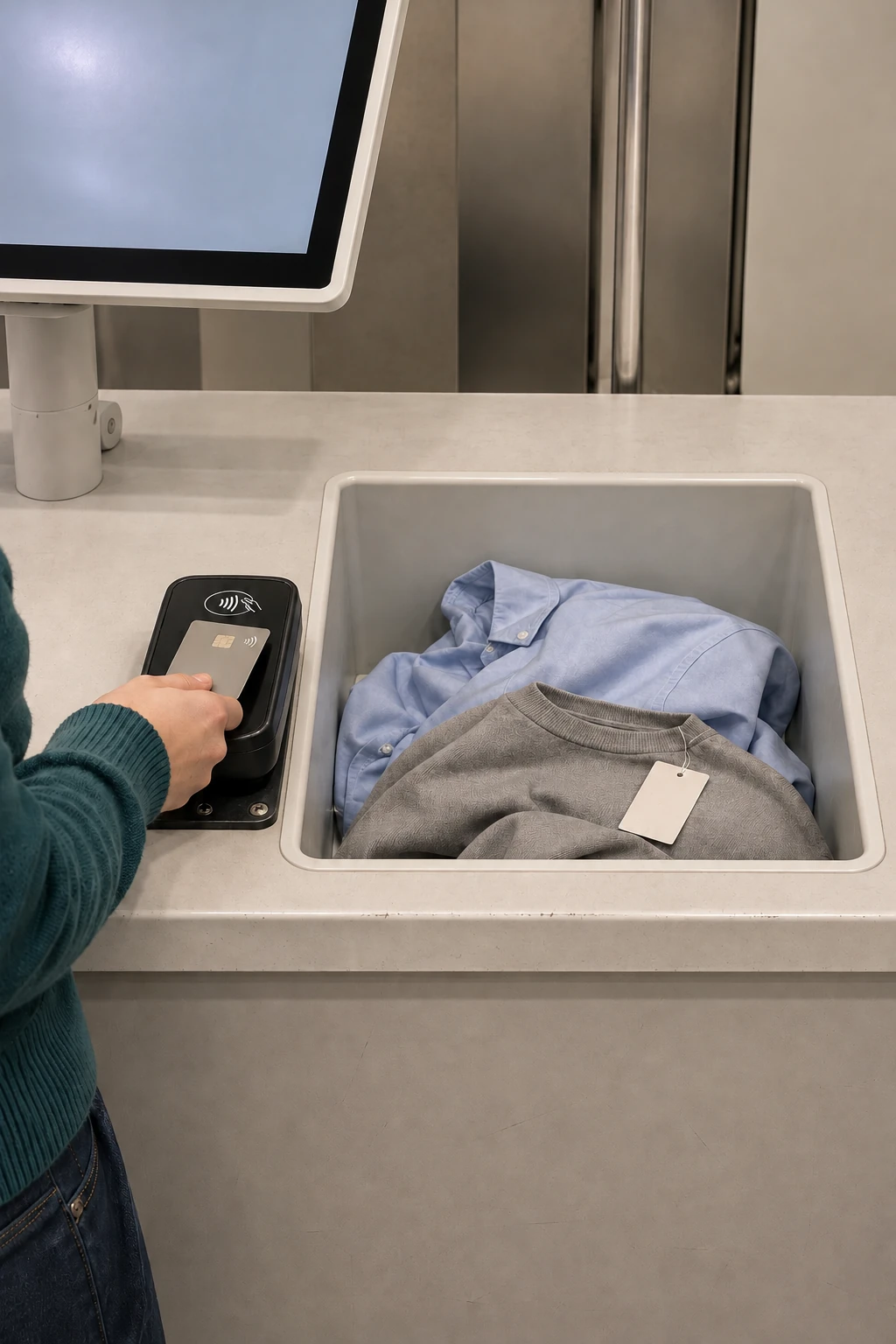
A shopper tapping a payment card beside a deep RFID checkout tray holding two garments.

Express checkout

Compact and discreet, our RFID tags can be integrated into products and packaging of different sizes and shapes. They enable multiple items to be identified simultaneously, without the need to scan each barcode individually. This means shorter queues, faster transactions and a smoother checkout experience for both customers and retail staff.

Dimension:
50 mm diameter
Read distance:
1–2 m
Try our tags
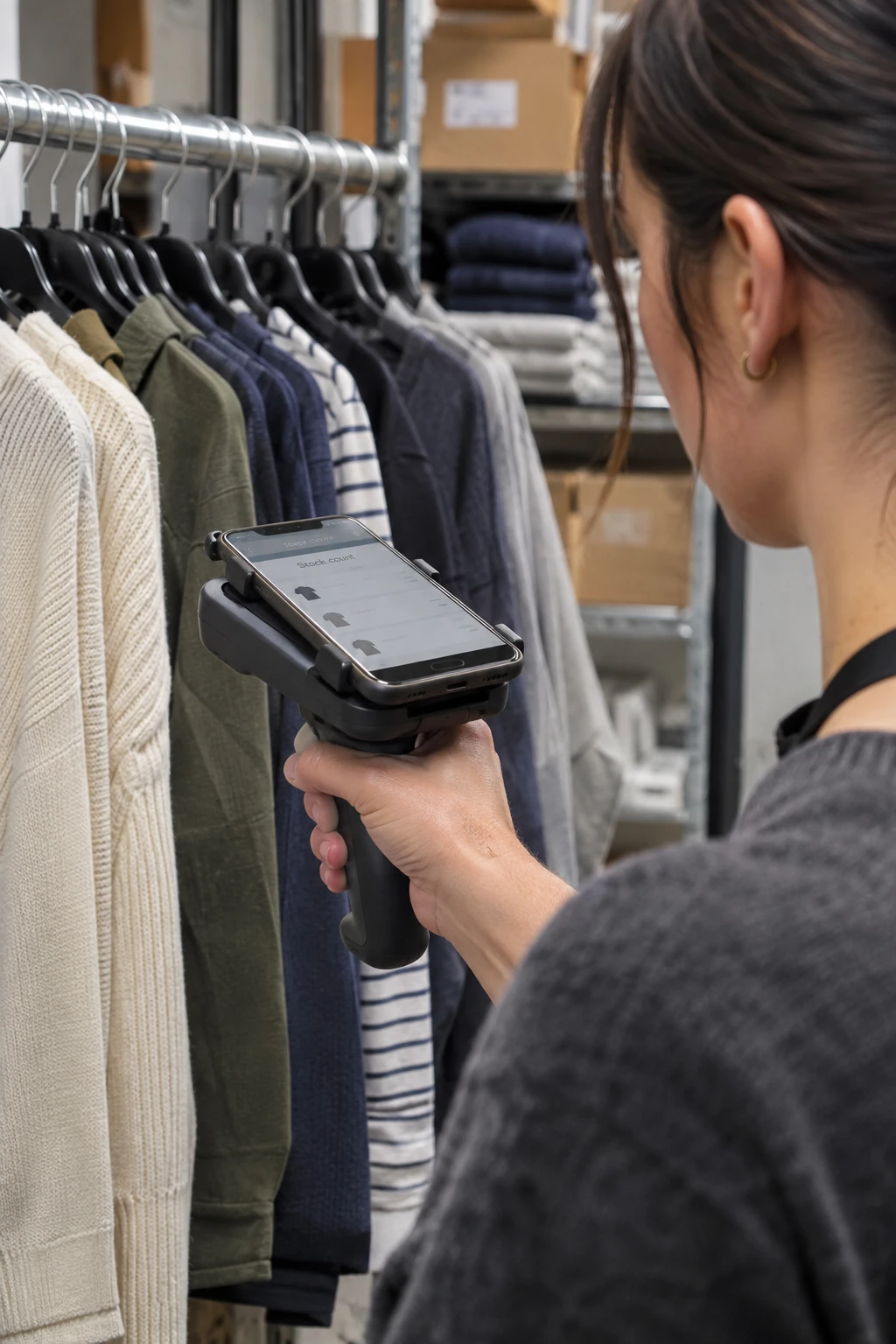
A stockroom associate counting garments with a smartphone mounted on an RFID reader.

Effortless stock counting

Designed for small and medium-sized businesses, our RFID tags allow staff to identify multiple items from a distance, without direct line of sight. Whether checking shop shelves, clothing racks or small stockrooms, staff can complete stock counts with less movement and fewer repetitive scans. This makes everyday stocktaking faster, simpler and more efficient, saving valuable time and manual effort.

Dimension:
82 × 30 mm
Read distance:
2–4 m
Try our tags
Labelled cartons passing a side-mounted RFID antenna at carton height on a packaging conveyor.

Smart packaging

Give everyday packaging a unique digital identity with RFID tags that enable item-level traceability throughout the supply chain. From production and distribution to retail, products can be identified at key stages of their journey, improving inventory visibility and shipment verification.

Dimension:
82 × 30 mm
Read distance:
2–4 m
Try our tags

Questions & answers

How do your paper RFID tags work?

Our tags use a conductive circuit on paper in place of a metal antenna and plastic base, and they work with standard RFID readers.

Are PulpaTronics tags compatible with existing RFID systems?

Yes. They are designed for widely used RFID standards and reader infrastructure, so you don't need to re-engineer your tech stack.

Why are conventional RFID tags a sustainability problem?

Most combine a metal antenna, plastic, adhesive and a chip. That makes them resource-heavy, hard to recycle, and usually treated as single-use waste.

How are PulpaTronics tags more sustainable?

They are paper-based and metal-free, so they can go into paper recycling with the packaging.

Do your tags match the performance of traditional RFID?

We aim for read ranges and reliability comparable to standard UHF tags with simpler, more sustainable materials. Targets are validated in pilots.

How do we integrate your tags into packaging or products?

We work with partners to define tag formats and conversion steps that fit your existing packaging and lines.

How can my company start a pilot?

Contact us with your use case and volumes. A typical pilot scopes target products, produces a limited run, integrates into your workflow and measures performance and sustainability impact.

Find the right tag for your product

Contact us